
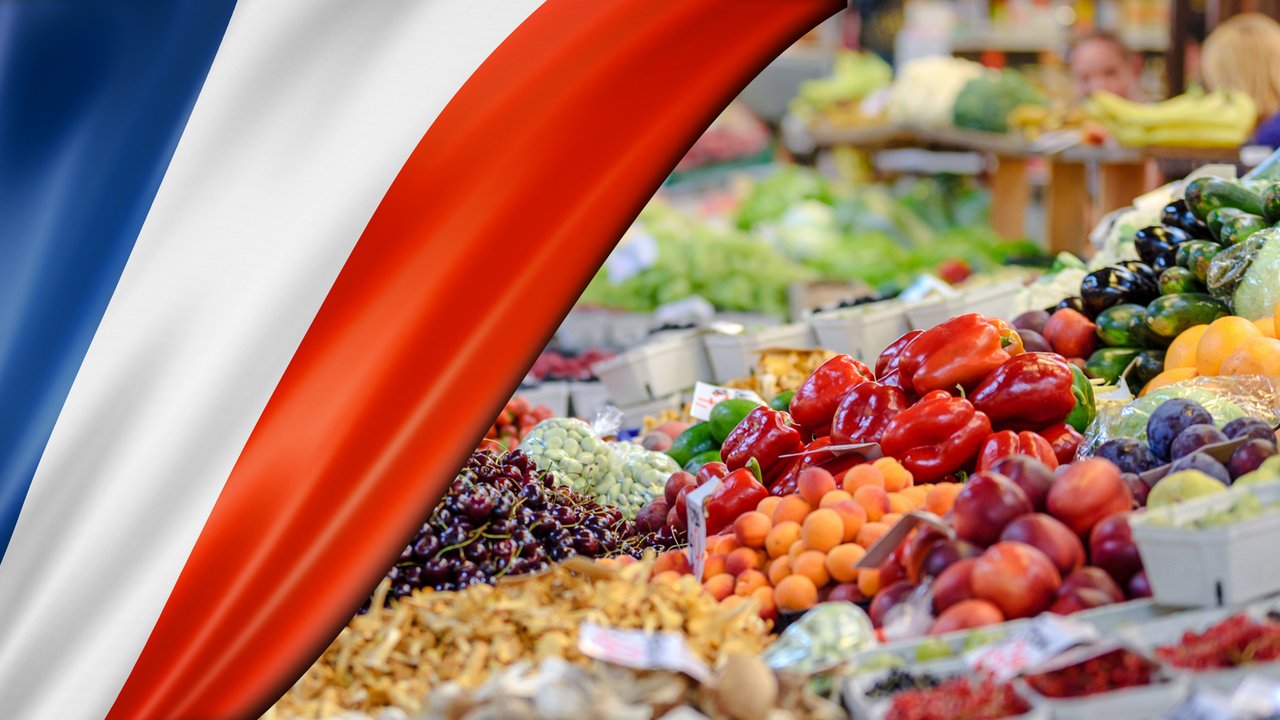
France Just Banned a Fifth of Its Fresh Produce Imports. Here’s the Full Story.
While everyone’s been watching the Brazil meat ban, France quietly pulled off something almost as disruptive, and it’s been running since February with a lot less attention.
Since February 8, 2026, France has banned any fruit, vegetable, or processed food entering the country if it contains detectable residues of four specific pesticides that are outlawed in the EU but still legal to use in plenty of other countries. No EU-wide rule change, no Brussels vote. France just decided to enforce its own line, on its own soil, starting now.
What’s actually banned
The order targets four substances: mancozeb, thiophanate-methyl, carbendazim, and glufosinate. All four are fungicides or herbicides that have been phased out in the EU over the past several years, but they’re still widely used in agriculture elsewhere, especially across South America.
The products affected read like a produce aisle: avocados, mangoes, guavas, papayas, table grapes, wine grapes, apples, pears, citrus (oranges, lemons, limes, mandarins, clementines), strawberries, melons, potatoes, tomatoes, peppers, and soybeans. Bananas got a specific carve-out and are still allowed to carry trace mancozeb residue under existing limits, but almost everything else on that list is now held to a strict standard: if inspectors can detect the banned substance at all, the shipment doesn’t get in.
To put a number on the scale of this: roughly 56% of France’s fresh fruit and vegetable imports from outside the EU fall under the scope of this ban, which works out to about 20% of France’s total fresh produce supply. Tomatoes account for the largest single chunk of affected volume at 18%, followed by avocados at 11%, oranges at 7%, and grapes at 6%.
Why France did this
The timing isn’t a coincidence. France was the loudest opponent of the EU-Mercosur trade deal, the agreement lowering trade barriers between the EU and Brazil, Argentina, Paraguay, and Uruguay. France tried to block it at the EU level and lost, the Council approved the deal’s principle on January 9, 2026. Two days later, France issued this pesticide decree.
French Prime Minister Sébastien Lecornu called it a first step to protect domestic supply chains and farmers from what he described as unfair competition. The country’s Agriculture Minister put it even more directly: imported products have to meet the same standards French producers are held to, regardless of where they come from. France has also been pushing for “mirror clauses” at the EU level, a rule that would require any country wanting to export food into the EU to follow the same farming rules EU producers follow. That hasn’t happened bloc-wide. France just went ahead and applied the logic unilaterally, to itself, right now.
Who’s actually affected
This is where it gets specific. A major French retailer reportedly paused orders from some South American suppliers as a precaution, right in the middle of peak mango and avocado season in Europe, since January and February are typically the strongest months for both. Morocco and Israel, two major citrus exporters, already ban these chemicals domestically, so their exporters are less exposed. Countries still relying on these pesticides in Latin America and elsewhere are the ones facing real friction getting produce into France.
Worth noting, this only applies within France. A shipment can still legally enter through another EU country and be sold there, France’s ban only blocks products from being placed on the French market specifically. That creates an odd situation: the same avocado that gets rejected at a French port could clear customs in Belgium or the Netherlands without issue.
Why this matters beyond France
This is unlikely to stay a one-country story. France’s Agriculture Minister and even President Macron have been openly pushing for the EU to adopt similar “mirror clause” standards bloc-wide. Whether or not that happens formally, France has effectively shown every other EU member state a playbook: if you’re unhappy with what a trade deal lets in, you don’t need Brussels’ permission to tighten your own border standards using existing food safety law. Don’t be surprised if other EU countries facing similar political pressure from their own farmers start looking at the same move.
What this means if produce ever enters your sourcing mix
For anyone bringing fruit or vegetables into France from outside the EU, particularly from Latin America, this is now a hard compliance line, not a formality. Products need to be verifiably free of these four substances, not just “under an old limit,” and France has stood up a dedicated control brigade specifically to enforce it at the border.
For buyers and traders more broadly, the bigger signal here is that country-level enforcement is becoming its own real variable in European trade, separate from whatever the EU decides collectively. A supplier being fully EU-compliant on paper doesn’t automatically mean smooth entry into every member state anymore. Origins and specific certifications matter more than they used to, and that’s worth building into how any produce-adjacent sourcing decision gets made from here.